
Most people think about their immune system only when they get sick.
But your immune system is active every single day — responding to stress, toxins, poor sleep, travel, gut imbalance, and environmental exposure. These constant inputs create what functional medicine calls “danger signals” that keep the immune system on high alert.
The goal is not to “boost” the immune system.
The goal is to modulate, nourish, and protect it so it responds efficiently without becoming overactive or exhausted.
Here’s how to do that using evidence-based herbal and nutritional strategies.
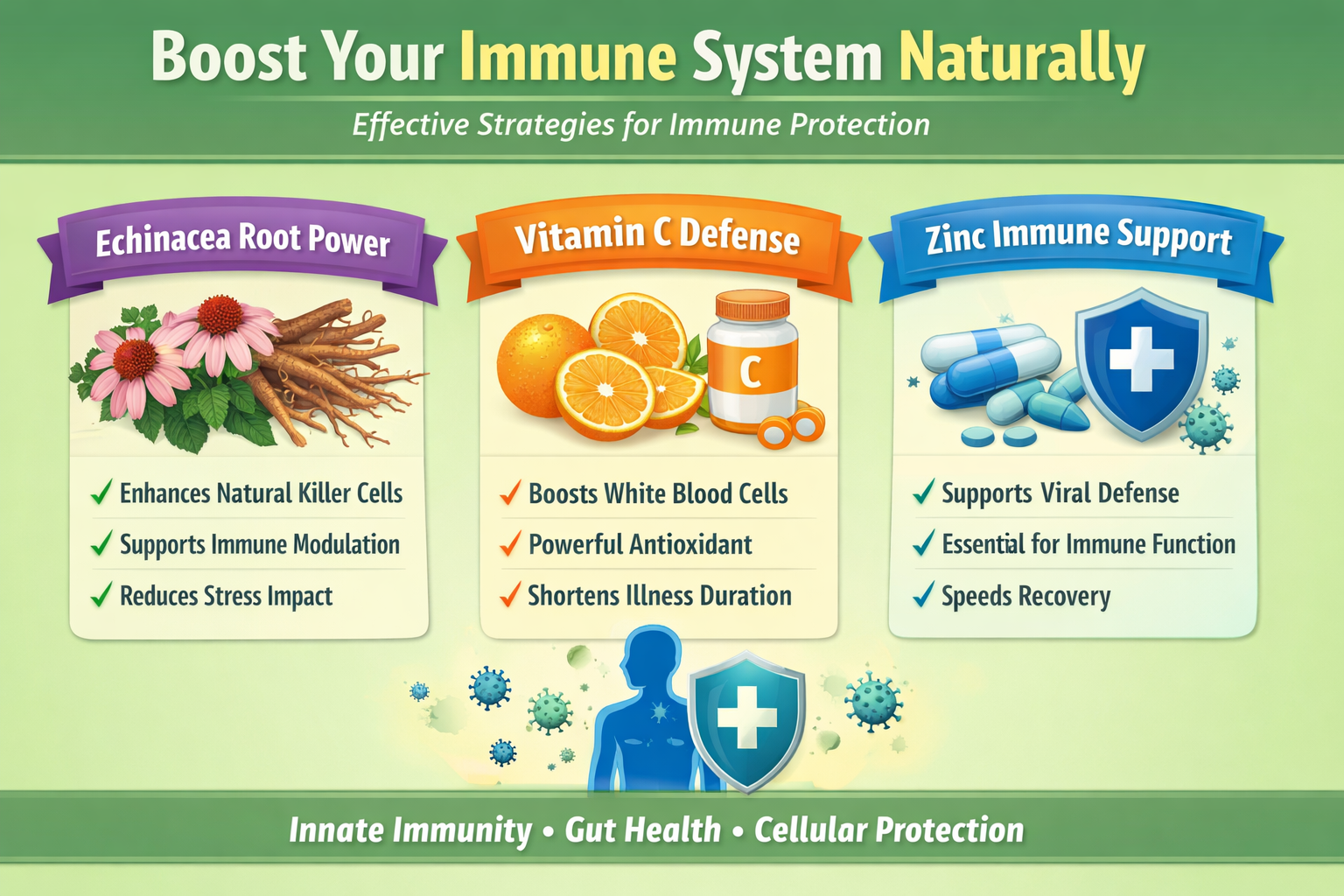
Echinacea root contains alkylamides that interact with cannabinoid receptors and enhance natural killer cells, T-helper cells, and immune communication without overstimulation.
Not all echinacea is the same.
The immune-active compounds — called alkylamides — are concentrated in the root of the plant. Many commercial products use the flowers and leaves because they are cheaper to harvest, but those parts do not provide the same immune effect.
Echinacea root has been shown to:
This is why echinacea is considered a true immune modulator, not a stimulant.
Clinical research shows echinacea increases heat shock proteins by over 50%, protecting cells from oxidative and toxic stress.
Heat shock proteins protect cells from:
Higher dosing has also been shown to significantly increase natural killer cells, which are critical for immune surveillance and long-term health.
Studies show echinacea helps normalize immune suppression caused by stress.
This makes it particularly useful during:
✈️ Travel
😰 High stress periods
🤒 Early signs of illness
It supports both immune resilience and stress adaptation.
Green tea activates the Nrf2 pathway, reducing cellular damage signals that keep the immune system in constant alarm mode.
When cells are damaged by toxins, poor diet, or oxidative stress, they send distress signals that activate the immune system unnecessarily.
Green tea catechins (EGCG) help:
This is immune support at the cellular level.
Calcium is how immune cells communicate with each other.
Without adequate calcium, immune signaling becomes inefficient.
Think of calcium as the telephone line between immune cells.
Before antibiotics, mothers gave children:
🥣 Bone broth
🥄 Cod liver oil
Why? Because vitamins A and D are essential for:
Nearly 70% of the immune system lives in the gut lining and microbiome.
Gut imbalance constantly triggers immune alarms.
Supporting the gut helps reduce chronic immune stress by:
Echinacea can be used differently depending on the situation.
For daily maintenance, take one to two doses per day to keep immune cells active and responsive without overstimulation.
During travel or high stress, increase to two to four doses per day to support the immune system during vulnerable periods.
At the first sign of illness, especially within the first six hours when the innate immune system is most active, echinacea can be taken more frequently — up to six to eight doses throughout the day — to help the body respond quickly and effectively.
The principle is simple:
low dose for maintenance, moderate dose for stress, higher short-term dose at symptom onset.
Echinacea tells the immune system what to do.
Vitamin C and zinc give the immune system the tools to do it.
Then return to maintenance dosing.
✅ Innate immunity
✅ Acquired immunity
✅ Mucosal (gut) immunity
AND
🚫 Reduce danger signals from toxins, poor diet, stress, and dysbiosis.

